Sunday, April 27, 2014

Jack Jouett House, Versailles, Kentucky

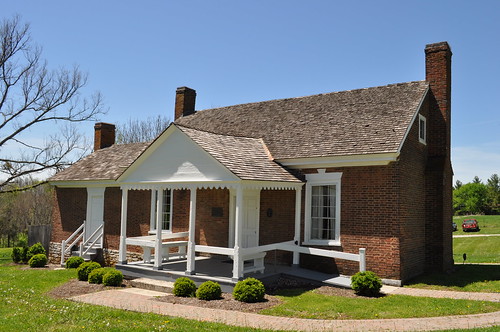
The Jack Jouett House, Versailles, KY
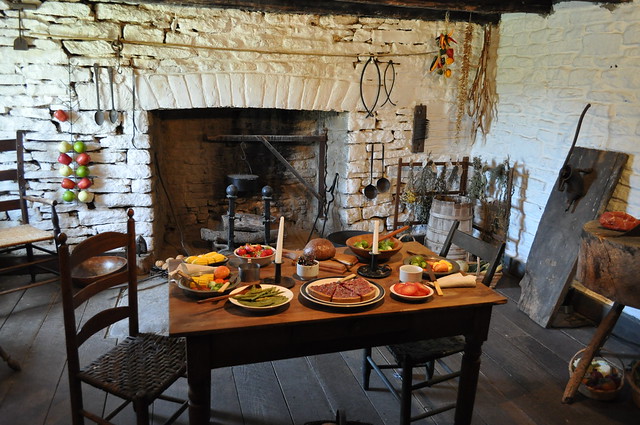
Nestled in among the rolling hills and horse farms of Woodford County, just 6 miles southwest of Versailles, sits the estate of one of Kentucky's earliest and most prominent settlers and distillers - John "Jack" Jouett, Jr. The Jack Jouett House, a 1797 Federal-style brick home with attached circa-1780 stone cabin, has been meticulously restored and populated with antiques appropriate for the time period that the Jouett family occupied the property. Admission to the house, grounds, and visitor center (completed in 2009) is completely free and includes a guided tour by an extremely knowledgeable docent.

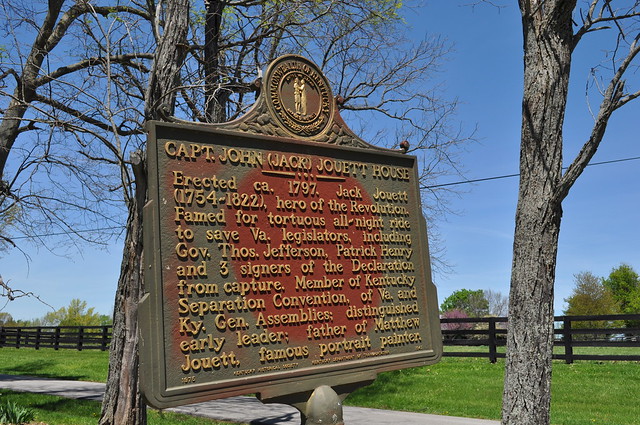
Although little remembered by those outside of Kentucky, Jack Jouett was a hero of the American Revolution who gained a reputation as the "Paul Revere of the South" for his daring 1781 ride to warn Thomas Jefferson and the Virginia legislature of a surprise raid being conducted by the infamous British colonel Banastre Tarleton.

In 1782, Jouett moved to Mercer County (in what is now Kentucky) and served first as a Virginia legislator and then as a member of the Kentucky legislature when the Bluegrass State formed in 1792. While in Mercer County, Jouett married Sarah "Sally" Robards and started a family, one of whom - Matthew - would rise to fame as a portraitist. Many of Matthew's portraits (reproductions, of course) are on display at the Jouett House.

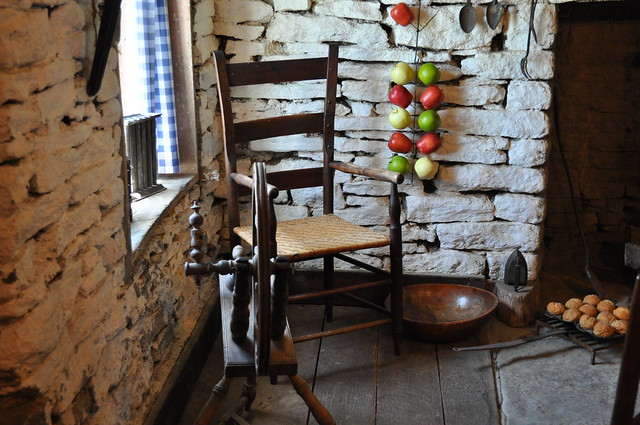
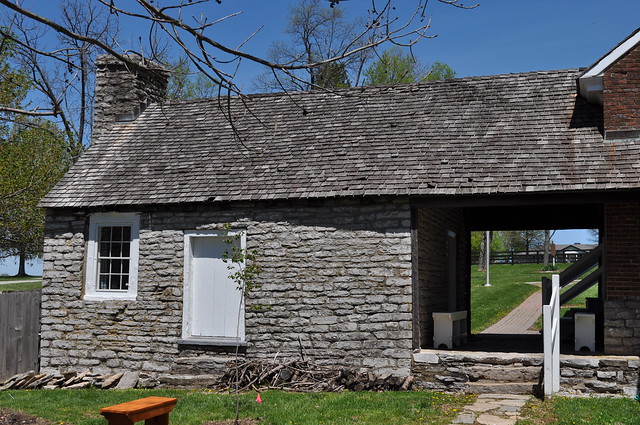
Original c. 1780 stone cabin
Jouett moved his family to this small stone cabin in Woodford County in the mid-1790's, eventually constructing his new brick home with an eye toward flaunting his status as one of the young state's most influential citizens. The family wouldn't remain here long, however, as indebtedness forced Jouett to sell his estate an relocate to Bath County where he died in 1822.

Much of Jouett's 500-acre property has been parceled off over the years, with just the small portion comprising the historic site open to the public. Even so, the comprehensive display of Jouett family history in the visitor's center, the beautifully restored cabin and main house, and the frontier kitchen garden make this a worthy side trip destination. With a price tag of free, you can't beat the value.

Photo Gallery
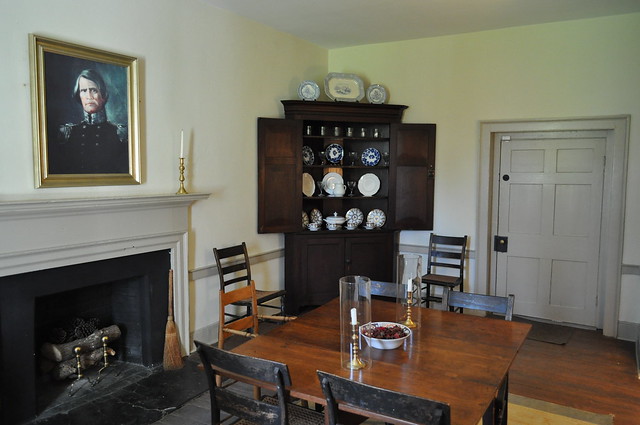
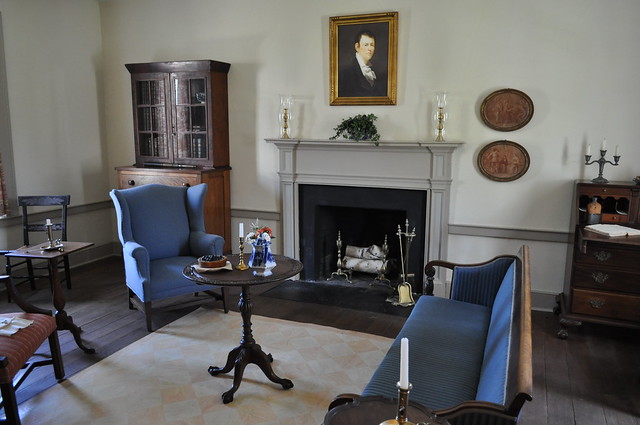
Jack Jouett Dining RoomJack Jouett Parlor
Interior of Stone CabinInterior of Stone Cabin
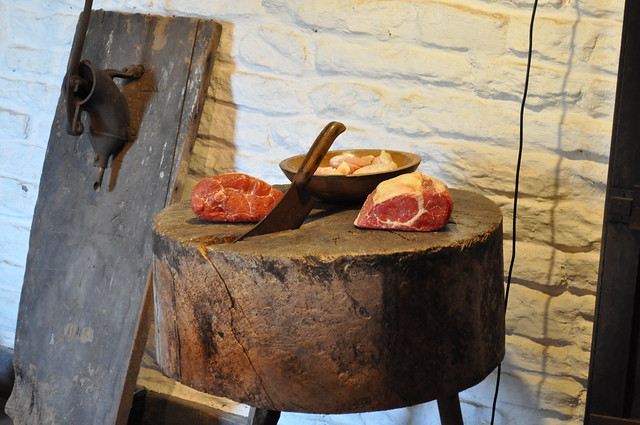
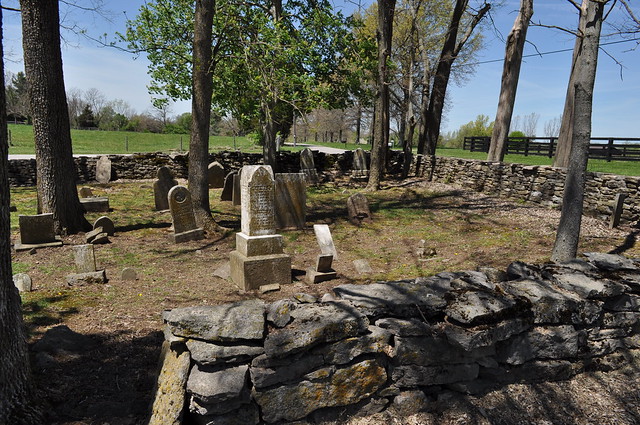
Frontier Chopping BlockJack Jouett House Graveyard


Suggested Reading:

Tuesday, September 24, 2013

Jacob Spears House, Paris, Kentucky

One of the main attractions of the Blue Grass region is the Kentucky Bourbon Trail, a driving tour that visits seven of the more famous Bourbon distilleries in the area. Ironically, the Trail bypasses the place where it all began. Located in the countryside just north of Paris in Bourbon County - of course - on quiet Clay Kiser Road (38.267753, -84.307994), is the Jacob Spears house and distillery (also known as Stone Castle).  Jacob, who was born in Rockingham County, Virginia, in 1754, first began distilling whiskey in Kentucky in 1790 and is widely considered the first to coin the term "bourbon whiskey".

Jacob Spears House, Bourbon County, KY
Jacob Spears house, Bourbon County
Spears was a Revolutionary War veteran, serving in Captain Hoagland's company of Colonel William Crawford's regiment during the Sandusky expedition of 1782. He later joined Joseph Bowman's company as a sergeant and trekked with that outfit to present-day Harrodsburg, in Mercer County, where he purchased a tract of Bourbon County land from John Haggin.

The stone Federal style house (which features Gothic Revival additions) was built on Spears' property in c. 1790 by Thomas Metcalfe, a fellow Bourbon County resident who would become Kentucky's 10th governor. Together with his wife Elizabeth née Kellar, Spears raised six children (4 daughters and 2 sons) on his farm while continuing to produce bourbon for markets as far away as New Orleans.

Jacob Spears House
After Jacob died in September of 1825, the distilling operation was continued by his son Soloman before being sold to Abram Fry. William H. Thomas purchased the farm and distillery in 1849 and continued its operation until 1882. In 1881, what was then known as the W.H. Thomas Distillery produced 900 barrels of Kentucky bourbon.

Just across Clay Kiser Road from the house sits the remaining stone bourbon warehouse that was built around the same time as the house. Up to 2500 barrels of whiskey could be stored in this remarkably preserved outbuilding.

Joseph Spears Distillery
Spears distillery warehouse
Today, the property is privately owned by a lawyer and his wife, who is currently serving in the Kentucky House of Representatives. There is no public access, other than to take photos from the road. At the corner of Clay Kiser Road and Cynthiana Road (US 27) sits Kentucky historical marker 2295. It's situated in a rather inconvenient location, so I didn't bother obstructing traffic to get a photo. The text, however, follows:

"Named after Bourbon Co. because of quantity and quality of whiskey produced within its borders. Made from a fermented mash of at least 51% corn, with less wheat, rye, or barley, yeast and limestone water. Distilled at no more than 160 proof and aged in charred oak barrels. In 1964, Congress recognized bourbon as a distinctly American product.

(Reverse) Stone Castle, 1 mile south, built 1790 by Thomas Metcalfe for Jacob Spears. A Pennsylvanian who settled in Paris, he was innovative farmer & one of first distillers of bourbon whiskey. Still standing on this farm are a springhouse and a storehouse for his bourbon whiskey. It is the most complete distiller’s complex still in existence today."


Suggested Reading:

Wednesday, September 18, 2013

Scott County AirFest 2013

It's been years since we've been to a bona fide air show. It's been so long, in fact, that I can't rightly recall the when and where of the last one we went to. Thinking back on it earlier this summer, I was surprised to discover that we might not have been to an air show since were still stationed at Offutt Air Force Base, Nebraska, in 1997. Time certainly flies, and it's a shame that we didn't take advantage of attending more shows over the years while the kids were still young.

The Opening Ceremony of AirFest 2013
Resolved to make amends, I began to scour the Internet for upcoming air shows in our vicinity. I learned that, besides the massive and incredibly difficult to attend Thunder Over Louisville extravaganza held each year, Kentucky is somewhat barren of air show opportunities. As luck would have it, though, one of the few Kentucky air shows is held every other year just down the road from The Homestead.

Officially called the Georgetown-Scott County Air Festival, the Scott County AirFest is a relatively new event that organizers hope to hold every other year in September.  Taking place at the Georgetown/Scott County Regional Airport, the show originated as a means of drawing attention to the airport as an alternative to the Blue Grass airport in Lexington for private and commercial light aviation usage.

Small crowd
The last air show featured a number of warbirds, including a B-17, as well as Kentucky Air National Guard aircraft. This year, thanks to The Sequester, no active military aircraft would be participating. Vintage aircraft would be limited as well, with a B-25 from the Yankee Air Force in Michigan (Go Blue!) serving as the centerpiece. For the air show starved public, like me, it seemed good enough.

Since The Youngest was down with a migraine, Wonderful Wife and I headed for the show on our own. The weather was absolutely beautiful - a cloudless, deep blue sky and temps in the low 70's. After a short hayride from the parking area to the flightline entrance (not something you expect at an air show), we handed over our $5-a-piece admission fee and stepped onto a tarmac that was packed with aircraft nearly empty. A few private aircraft were available for viewing near the entrance (think Cessnas and Beechcraft) and the B-25 could be seen at the far northern edge of the pavement, but in between - nothing. Well, almost nothing. A Stearman biplane was taxiing out to give a lucky enthusiast the open-cockpit ride of their life, but really that was the extent of the displays.

The Stearman taking a passenger for a ride
We watched the three parachutists descend with their American flags, then headed past the antique tractor display and community services booths to the B-25. Built in 1943, B-25D s/n 43-3634 was assigned to the 489th Bombardment Squadron where, as the "Ellen E. & Son", she flew seven combat missions over Corsica, Sicily, and the Brenner Pass. After the war, the aircraft was handed over to the Royal Canadian Air Force where it remained until purchased by a private party out of Detroit. Eventually making her way to the Yankee Air Force, she was renamed "Yankee Warrior" and restored to military configuration in 2001.

B-25D "Yankee Warrior"
The crowd was sparse, but the majority of those that were in attendance had gathered around what was obviously the main attraction. I managed to snap a few exterior photos, but the interior was pretty well buttoned up since she would be conducting flights for the very lucky few who could plop down $400 for a ride. I, alas, was not among the few.

While most of the adults were fawning over the B-25, many of the children in attendance were mesmerized by the remarkably "life-like" R2D2 replica. Even R2's squeaks and clicks weren't enough to make up for the disappointment of not seeing more aircraft on display.

Good ol' R2D2
After having spent just over an hour on the premises, Wonderful Wife and I left for our "Plan B" activities (more on that later). Although I'll keep an eye on the plans for the next edition of AirFest, it's unlikely that I'll take time out to attend. It was a dud of an air show, but if there is a bright side to the time we spent there it's that my air show appetite has not been sated.
Friday, September 6, 2013

Indiana Caverns

Indiana Caverns
To celebrate the last "official" three-day weekend of the summer, I gathered the family into the Corolla and we headed west to explore Indiana Caverns. Only open to the public since June, this attraction has been generating some buzz due primarily to their somewhat unique offering of an underground boat ride - the deciding factor for me when choosing our destination. We'd been looking forward to this trip for a couple of weeks because, other than briefly exploring an unmapped cave on our neighbor's farm, we hadn't been underground since last visiting Mammoth Cave back in 2009. Ultimately, the experience lived up to expectations!

Indiana Caverns was established as a commercial venture by Gary Roberson and the Indiana Speleological Survey in order to provide a public entrance to the Binkley Cave system, the largest cave system in Indiana. Prior to this venture all of the known access points were located on private property, keeping the wonders of the caverns restricted only to those properly trained and equipped to experience them.

Indiana Caverns Gift Shop
Located just a short drive south of Corydon, Indiana Caverns' newly constructed above-ground facilities can be a bit easy to miss unless you're sure to grab directions before embarking on your trip. Hopefully more prominent signage is in the plans for future visitors. The unassuming structure that houses the gift shop and serves as the origination point of the cave tours also contains a vending machine (great for post-tour refreshments) and well-cared for restrooms.

Tours, which depart approximately every 30 minutes, begin with a short film production that explains the history of Indiana Caverns as well as providing a brief summary of caves in general. Be prepared to encounter a subtle creationist bias to the science that's presented, if that sort of thing bothers you. Although the production doesn't come close to being a Michael Bay extravaganza, it serves as a decent introduction to the cave system and well worth sitting through its short running time.

Entrance to the cave is achieved through an airlock of sorts - one of the many measures implemented by Indiana Caverns to preserve and protect the cave system. In my mind it goes without saying, but after reading some of the reviews on TripAdvisor I learned that many cave visitors didn't expect to have to navigate steps of any sort while touring the caverns. Well, Indiana Caverns has 'em, and many of them involve spiral staircases with see-through metal grates. Be prepared to descend (and ascend) a fair number of steps.

The walking portion of the tour is conducted not on the natural cave floor surface, but on elevated "cat walks". Not only does this help preserve the cave, but it also provides a walking surface that is - fairly - consistently level. The walkway also has handrails to either side, allowing for maximum stability and "user-friendliness". You lose a little of the natural beauty aspect, with these man-made surfaces constantly in view, but it's far less of a distraction than you'd think. Instead, expect your attention to be held by the many calcium formations (stalagmites, stalactites, etc.), the evidence of prehistoric animal habitation (including the nearly complete remains of an Ice Age peccary), and the highlight of the tour - a boat ride on an underground stream.

Peccary bones in Indiana Caverns
Visitors are loaded, two-by-two, into a specially designed flat-bottomed boat to be taken to the furthest reaches of the "developed" portion of the cave. While the ride is relatively short, it's an uncommon feature found in only a handful of commercial caverns around the country. This was a first for both Wonderful Wife and The Youngest, and I can assure you that they (and I) thoroughly enjoyed the experience.

Compared to other cave destinations, Indian Caverns ranks somewhere in the middle. The formations are interesting but not awe-inspiring and the tour length is relatively short, but this attraction deserves a place on your itinerary.


Tuesday, August 27, 2013

Loveland Castle, Loveland, Ohio

Chateau LaRoche, Loveland, Ohio
Taking advantage of an absolutely beautiful Sunday, Wonderful Wife and I spent the day exploring a new (to us) Cincinnati attraction - the Loveland Castle. Located on the western bank of the Little Miami River, just to the north of the suburb of Loveland, and known officially as Château LaRoche, the castle was built by Harry Andrews over the course of 50+ years. Using stones collected from the Little Miami as well as hand-made cement bricks, Harry toiled relentlessly until his death in 1981. Harry's order of knights, known as the Knights of the Golden Trail, maintain and continue to expand the castle to this day.

Chateau LaRoche, Loveland, Ohio
View of Loveland Castle from the gardens
The castle is relatively easy to find, with visible and well-placed signage not far from the nearest main thoroughfare (US-22, aka Montgomery Rd). When we arrived, there were only two other cars in the parking lot but several other visitors materialized (including a group by canoe) as we explored the castle and grounds. The Knights, as Harry's Boy Scout troop refer to themselves, not only maintain the property but serve as interpretive guides. Officially the castle is a "self-guided" attraction, but don't be surprised if one of the Knights attaches himself to your group as you meander through the structure.

While the Knights provide a wealth of information regarding the history of the castle, its builder, and their Order, be prepared for an occasional nugget of fancy to be tossed your way.  For example, we were told that Harry, a World War I nurse, was knighted by the Queen of France for his wartime humanitarian service - which bestowed upon Harry his power to knight others. As wonderful a story as that may be, the French monarchy was dissolved by the Third Republic in 1870 - nearly 50 years before Harry arrived in Europe. One could argue that the last "queen" of France, the Empress Eugénie de Montijo, was alive until 1920 and so could have encountered Harry, but she lived as an exile in England and Spain. The story of Harry's knighthood doesn't mention any trips outside of France before he returned to The States.

The gardens of Loveland Castle
The gardens
What is certain is that Harry was a man possessed of great ingenuity and perseverance. Having visited several castles in Ireland, I found his attention to detail quite remarkable. Although his man-made materials (the cement bricks formed using discarded milk cartons, specifically) reflect 20th-century innovation, it's quite easy to imagine Château LaRoche nestled alongside the Loire instead of the Little Miami.

The castle was not only Harry's obsession, it was also his home. As such, a few "modern" amenities can be seen throughout such as electric lights and running water. In what is often considered a trend in today's society, Harry grew his own food within the castle gardens, canning and preserving what he couldn't immediately consume. The Knights say that the last of Harry's canned goods remain in the castle, undisturbed to this day (and probably should remain that way!).

Hawaiian coral in the wall of Loveland Castle
Coral from Hawaii
Over the years, many visitors have brought their own contributions to help Harry realize his dream. Embedded within the walls are rocks (and other materials) from all 50 states and several countries. Wonderful Wife pointed out the coral from Hawaii and the fossilized wood from Arizona.

Although the motivations behind the creation of the Loveland Castle may be confounding, it's a truly unique experience worth the short trip from the Bluegrass (and the $3 admission fee).

Staircase leading to The Dungeon
The dining hall (with our Knight guide)
Passage to the gardens
Fun!

Thursday, August 15, 2013

River View Park in Frankfort, Kentucky

River View Park, Frankfort, KY
Wonderful Wife and I chose the hottest, most humid day we've seen in weeks to take a stroll along the Kentucky River in Frankfort's River View Park. At least it wasn't raining, which is remarkable given the incredibly wet summer our area has been experiencing. Extending along the bank of the river from the Ward Oates Amphitheatre to the Buffalo Trace Distillery, the River View trail is a mile-long paved walking path lined with picnic tables and a handful of historical markers. Parking at the Farmer's Market Pavilion, we didn't quite make it all the way to the distillery but still got in over a mile of walking.

Kentucky River Bridges in Frankfort
Kentucky River Bridges, Frankfort
The highlights of the trail are the views of the Kentucky River, since at the level of the park most of Frankfort is obscured by the levee that was built in the 1960's in response to decades of often devastating river floods. In fact, much of the park was under water as recently as 2010! Some of the most enjoyable vistas are of the several old bridges, both auto and railroad, spanning the river where it's joined by Benson Creek.

This junction of waterways also lends Frankfort its name. In frontier times, when the land that was to become Kentucky was still a vast and untamed wilderness, a group of settlers established a camp on the point of land where the creek meets the river. At this spot there was once an island where local Native Americans set their fishing nets, and the encroachment
Benson Creek joining the Kentucky River
Benson Creek emptying into the Kentucky River
by the white settlers was not taken kindly. The settlers' camp was attacked, resulting in the death of a man named Frank Ford. Since then, the crossing point of the river was known as Frank's Ford - over time morphing into Frankfort. The island disappeared under the river after the construction of the dam just downstream from the park, but the mouth of Benson Creek can clearly be seen from the trail.

Other interesting sites along the trail include several examples of dry mortar stonework, an art that originated in Old World countries such as Ireland and kept alive today by specialized craftsmen.
Stone bridge built by the Dry Stone Conservancy
Stonemasons from the Dry Stone Conservancy have constructed small sections of wall representing some of the common styles found in the Bluegrass region such as the double-faced fence, plantation fence, and edge fence. The stonemasons also crafted a beautiful walking bridge that would serve as an ideal location for Senior Pictures - something we'll keep in mind since The Youngest is a senior this year!

At a point near the northern parking lot (accessed from Wilkinson Blvd across from the Capital Plaza Office Tower) is a boat launch where you can get an up-close-and-personal look at the Kentucky River. Looking upstream affords a nice view of the newish (1980's) Robert C. Yount* Memorial Bridges, with the much older spans in the background.
Robert C Yount Memorial Bridges
Looking Upstream

Downstream, just out of sight, is Lock and Dam Number 4 which recently underwent a rehabilitation project with the goal of reopening this stretch of the river to boating traffic. Other than a nifty fishing spot, the boat launch is used for free river tours conducted by the Capital City Museum. Reservations are required for the 1.5 hour trip on the pontoon boat Nancy Wilkinson, but you can't beat the price!

A very scenic choice for a short walk, Frankfort's River View Park is a bit of a hidden gem worth a stop.

* Franklin County native and World War II Navy veteran Robert C. Yount (1909-1989) was mayor of Frankfort from 1953-57

The Kentucky River at Frankfort 
Looking Downstream
Railroad bridge over Kentucky River
RJ Corman Railroad bridge, built 1929
The Blue Bridge, Frankfort, KY
The "Blue Bridge", built in 1910 and now closed to vehicles

Friday, August 9, 2013

Kentucky Towns: Pleasureville

North Pleasureville, Kentucky
Original site of Pleasureville, at the intersection of US-421 and KY-22
Located in southern Henry County on its border with Shelby County, the town of Pleasureville (38.346099, -85.115404) occupies land originally settled in 1784 as part of a Dutch Huguenot colony. About a mile and a half northwest of what is now the intersection of Castle Highway (US Route 421) and Kentucky Highway 22, the Dutch erected their fort and named the subsequent settlement Bantatown after the colony's land manager Abraham Banta.

In 1828, a post office was established and the town's name officially changed to Pleasureville. Sources are unclear as to the actual origin of the new name, with most published accounts suggesting that a visitor to the area proclaimed his stay to be so pleasurable that the town's name should be changed to reflect the citizens' hospitality. The other story centers around the old Pleasureville Hotel. A brothel was supposedly operating in the building which caused the town to be referred to as Pleasureville among the hotel's patrons. As much as I would like to believe this particular story to be the truth of the matter, the chronology simply doesn't add up.

Old Pleasureville Hotel
The old Pleasureville Hotel
The original settlement that became Pleasureville in 1828 is located about a mile north of where the Pleasureville Hotel sits. In 1858, a full three decades after the town was renamed, what would ultimately become the Louisville & Nashville railroad passed south of Pleasureville. Not much later, a new town - which included the hotel - sprung up around the depot. By 1878, the post office (as well as the name) of Pleasureville had relocated south to the now bustling community at the depot. The original settlement became known as North Pleasureville and actually retained its own post office until 1962.

In its heyday, Pleasureville boasted not only a hotel and railroad depot, but also a cigar factory, multiple banks, and an ice cream parlor (among many other businesses). It also has the distinction of being home to Henry County's first school when the Lindley Academy was founded in the North Pleasureville vicinity in 1806.

Depot, Pleasureville, Kentucky
The Pleasureville depot, site of at least 5 Civil War executions
Pleasureville also played a role in the Civil War when a band of Morgan's raiders attacked the town on June 9th, 1864. Captain Richard J. Sparks, who was the Provost Marshall of the town and had earned a reputation as an overbearing and punitive sort of commander, was killed in the engagement. In retaliation for Captain Sparks' death, Major General Stephen Burbridge (known as the Butcher of Kentucky) sent two Confederate prisoners via rail from Lexington to Pleasureville to be executed. Blood would flow at the Pleasureville depot once again in November, as three suspected Confederate guerrillas were shipped to Pleasureville and executed as retribution for the killing of two local African-Americans.

Downtown Pleasureville, Kentucky
What remains of downtown Pleasureville
Today, virtually all of the earliest structures have disappeared, as have the L & N tracks. The depot remains, and so too does the hotel (as an apartment complex), but the once thriving downtown is now mostly vacant. There is a hardware store, a pool hall, and until recently a diner occupied the old depot, but Pleasureville appears to be headed for ghost town status.


Suggested Reading: